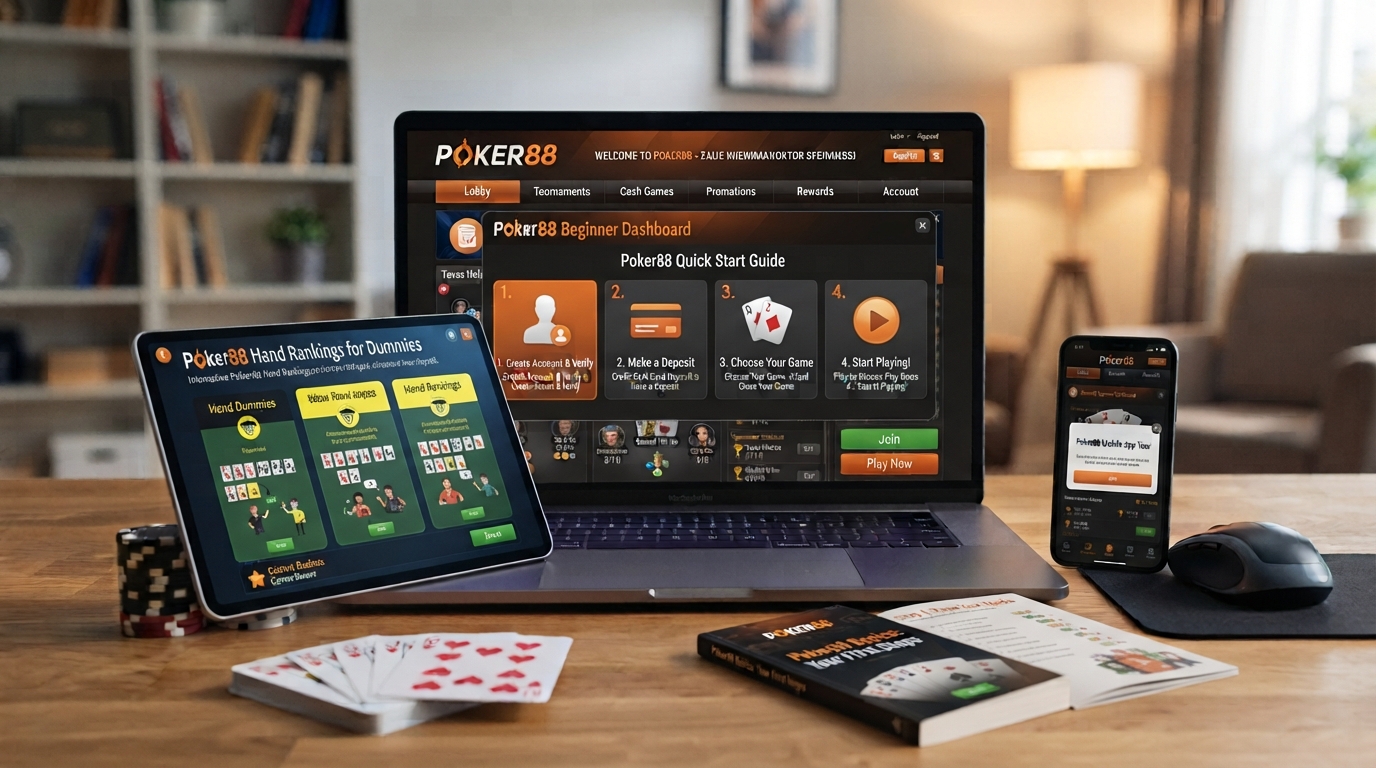
For someone encountering the name poker88 for the first time, it is useful to understand the broader context before interacting with any online poker or gambling service. Online poker platforms can combine traditional card-game mechanics with digital accounts, deposits, withdrawals, and other features that involve real money. Because of these factors, first-time users should approach such services with caution and understand the rules and risks involved.
Poker itself is a card game based on combinations, probability, decision-making, and incomplete information. Different versions of poker have different rules, but most involve players receiving cards and competing according to the strength of their hands and the actions taken during a round. While skill and strategy can influence decisions, outcomes also involve chance, meaning there is no guaranteed way to win.
Understanding Online Poker
Online poker differs from playing a casual game with friends because the platform handles many parts of the experience digitally. These can include account management, game selection, payment processing, identity verification, and transaction records. A person considering an online poker service should understand how these features work before making any decisions.
It is also important to distinguish entertainment from financial activity. Real-money gambling can result in losing money, sometimes quickly. Promotional offers, bonuses, or attractive game interfaces should not be interpreted as guarantees of profit. Players should never assume that previous results predict future outcomes.
What First-Time Users Should Know
Anyone researching an online poker service should first check whether gambling is legal for them and whether the service is properly licensed in their jurisdiction. Age requirements are particularly important. Gambling services are intended for adults, and minors should not create accounts, deposit money, or participate in real-money gambling.
Privacy and account security are also worth considering. Users should be cautious about sharing personal information and should understand what information a platform collects and how it is used. Reading terms and conditions, payment policies, and responsible-gambling information can provide useful context.
Another important point is financial awareness. Gambling should never be treated as a method of earning income. There is always a possibility of losing money, and chasing losses can lead to increasingly risky decisions. Anyone who finds gambling difficult to control should step away and seek support from a trusted adult or appropriate professional service.
Poker as a Game of Strategy and Chance
Poker can certainly involve strategic thinking. Players may consider probabilities, patterns, betting decisions, and the behavior of opponents. However, strategy does not eliminate uncertainty. A strong decision can still produce an unfavorable result because cards are dealt randomly.
For educational purposes, learning poker through non-monetary games can provide an opportunity to understand its rules and mathematical concepts without introducing financial risk. Beginners can study hand rankings, probability, and game theory without participating in real-money gambling.
Final Thoughts
For first-time users, the most important step is understanding what online poker involves rather than focusing only on winning. Poker combines skill, probability, and chance, while real-money platforms introduce additional financial and legal considerations. People who are under the legal gambling age should not participate in real-money poker or online gambling.
Learning about the game in a risk-free setting can be a safer way to understand its rules, strategy, and mathematics without financial consequences.